If you ride in Punjab, helmet enforcement is no longer something you can talk your way out of. Over 2026, news reports describe stricter checks, camera-issued e-challans and temporary bike seizures. This guide summarises what has been reported and how to stay on the right side of the rules. Rules and fines change by city and date, so treat this as a rider's overview and confirm details with your local traffic police.
What has changed in 2026
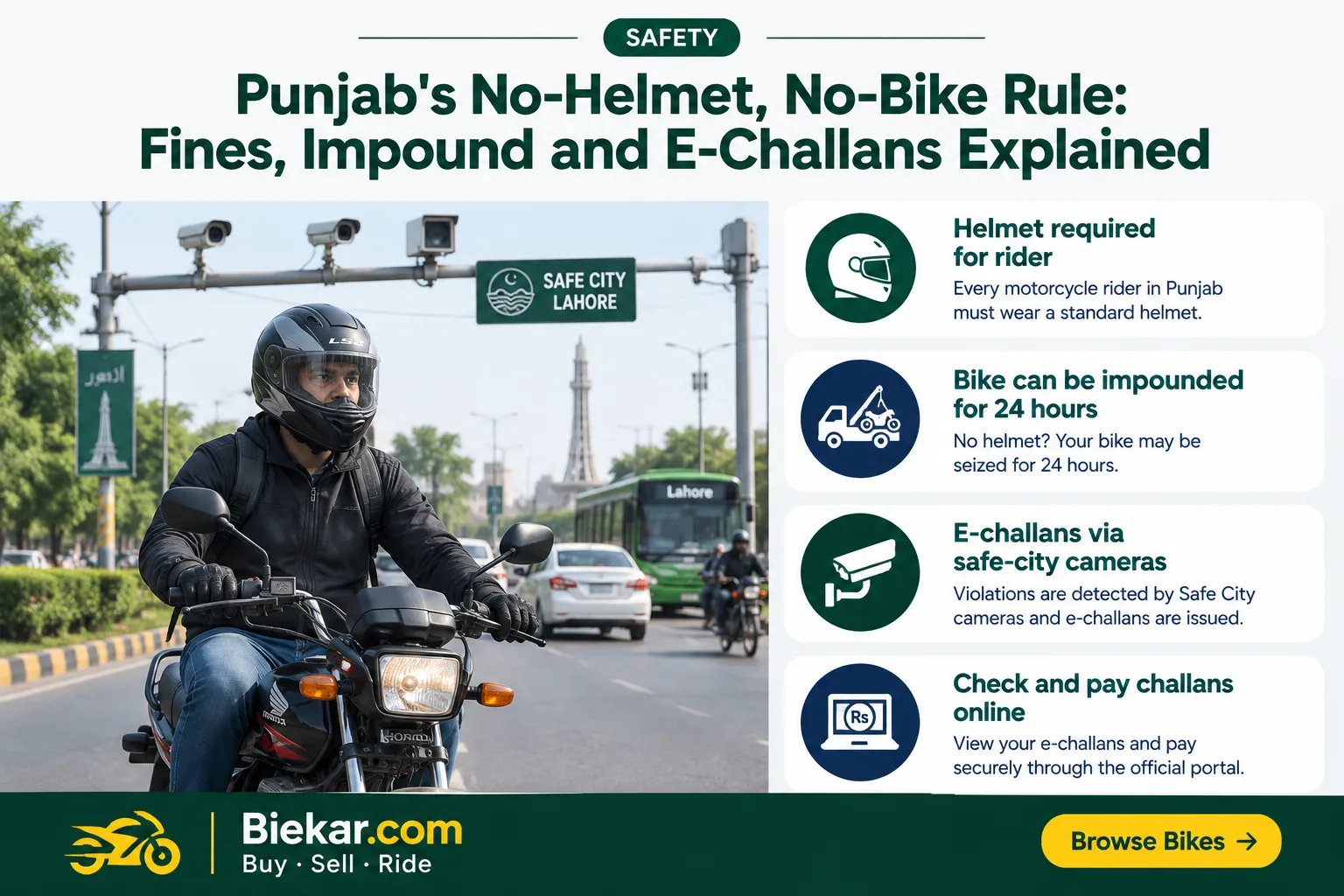
- 24-hour impound: In July 2026, Punjab authorities were reported to be enforcing a rule under which riders caught without a helmet face a fine and their motorcycle can be seized for 24 hours.
- Camera enforcement: Safe City cameras can identify helmetless riders and generate e-challans, and Punjab has been reported to upgrade the system with photo and video evidence.
- Repeat violations add up: In October 2026, Lahore police reported impounding a motorcycle that carried 113 unpaid e-challans, including 89 for riding without a helmet, with fines totalling Rs190,000.
How e-challans work
An e-challan is issued against your number plate, so it reaches the registered owner whoever was riding. That matters if you lend your bike or buy a used one. Earlier Punjab announcements put the helmet e-challan at Rs2,000 per violation, though amounts can differ by violation and city.
Check and challenge a challan
- Visit the official PSCA e-challan portal.
- Enter your registration details to see any pending challans.
- If a challan looks wrong, use the portal's online challenge option instead of ignoring it.
- Pay valid challans promptly so they do not pile up.
Common mistakes riders make
- Wearing a helmet but leaving it unfastened.
- Letting a pillion rider go without one. Karachi police have also warned delivery riders to carry an extra helmet.
- Buying a used bike with hidden challans. Ask the seller to clear them before transfer. Our ownership transfer guide and used bike checklist cover this.
- Using a cheap, uncertified helmet. See how to choose a safe helmet and spot a fake.
Why this matters beyond the fine
A helmet is the single most effective piece of protection you can wear, and a seized bike means lost work and lost income for a daily commuter. Pair the helmet with sensible gear from our riding gear guide.
Quick checklist before every ride
- Certified helmet, properly strapped.
- Registration documents and licence with you.
- Number plate original, clean and visible.
- No unpaid challans on your plate.
Disclaimer: This article summarises news reports and is not legal advice. Penalties and enforcement vary by city and can change, so check with your local traffic police or the official portal.
Sources: Daily Times (July 2026); ARY News (October 2026); Tribune (January 2024); ProPakistani (November 2025); TechJuice.
Need a new bike or helmet? Browse Biekar.com.
Looking for your next bike?
Browse thousands of new and used motorcycles from sellers across Pakistan.
Browse BikesMore articles
 Safety
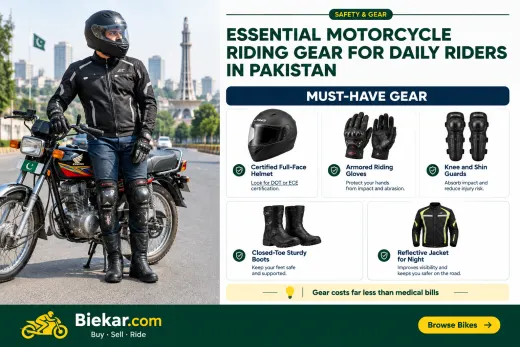
Essential Motorcycle Riding Gear in Pakistan: What Every Daily Rider Needs
Most riders treat gear as optional, yet it costs far less than a hospital bill. Here is the gear that matters, in order of priority.
 Safety
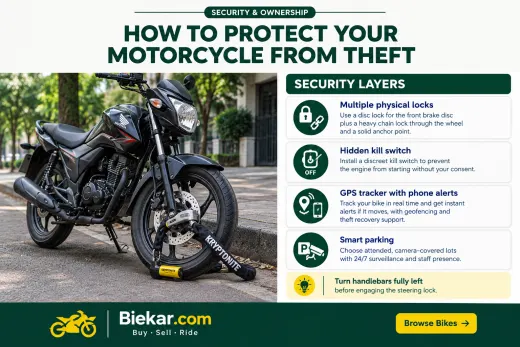
How to Protect Your Motorcycle from Theft in Pakistan: Locks, Trackers and Parking Habits
Factory steering locks are easy to break. Layered security and smart parking make your bike a harder target.
 Safety
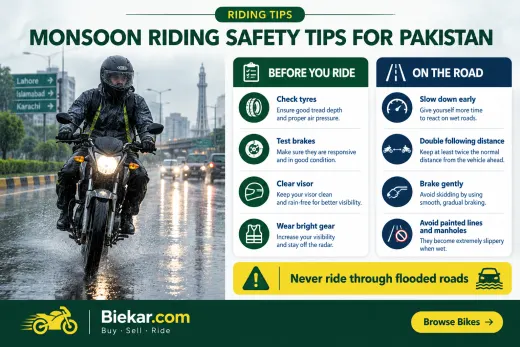
Riding in the Rain: 15 Monsoon Safety Tips for Pakistani Motorcyclists
Slippery roads, flooded streets and poor visibility make monsoon riding risky. These tips help you get home safely.