
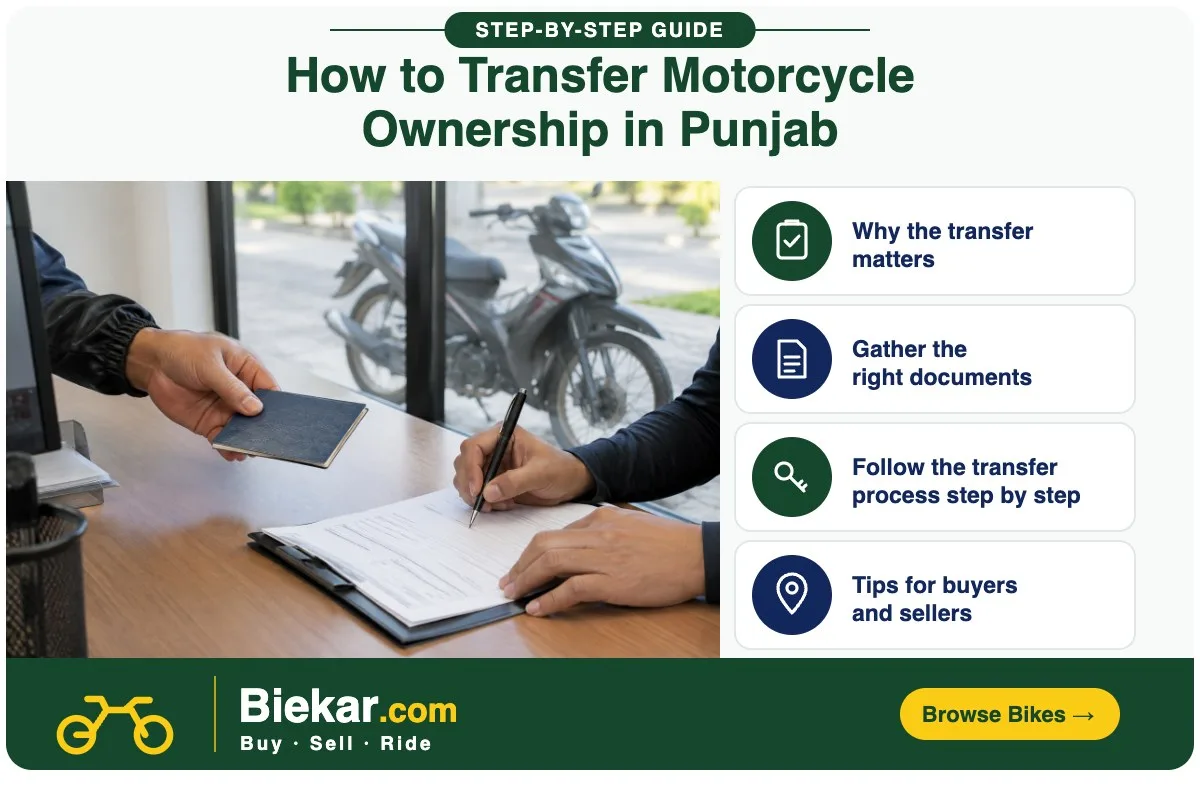
To transfer a motorcycle in Punjab, the seller and buyer both visit the excise office with the bike's papers and CNICs, the transfer is verified (including biometric verification of both parties), and the registration is then recorded in the buyer's name. Until that happens, the bike legally still belongs to the seller, and that is the main risk for both sides. This guide walks through the process in plain steps. Rules, forms and fees change, so always confirm the current details with the Excise, Taxation and Narcotics Control Department of Punjab before you go.
Why the transfer matters
A handshake and cash are not a transfer. If the registration stays in the old owner's name, the seller can still receive challans, token tax notices or even police questions about a bike they no longer own. The buyer, on the other hand, cannot prove ownership, cannot easily sell the bike later and may face trouble at a checkpoint. A completed transfer protects both sides, so do it within days of the sale, not months.
If you are still choosing a bike, read our checklist for buying a used motorcycle first. It covers the physical inspection that should happen before any paperwork.
Documents to gather
Exact requirements can differ by city and by the type of registration, but these are the items people most commonly need:
- The registration papers: the original registration book or smart card of the bike.
- CNICs: original CNIC of the seller and of the buyer, with photocopies.
- Token tax proof: receipts showing the annual token tax is paid up to date.
- Sale or transfer letter: a signed letter or the department's transfer form, depending on the office.
- Passport-size photographs of the parties, if the office asks for them.
Our guide to smart cards, token tax and biometric verification explains each of these documents in more detail.
Step-by-step transfer process
Step 1: Check the papers before paying
Match the engine number and chassis number on the bike with the numbers in the papers. Look for scratched or re-stamped metal, mismatched names and any note on the file about a dispute. If anything looks wrong, stop. Our article on how to spot a stolen or fake-paper bike lists the warning signs.
Step 2: Clear the token tax
Ask the seller to clear any unpaid token tax before the transfer. It is the seller's responsibility to hand over a bike without old dues, and an unpaid balance can delay the process at the counter.
Step 3: Agree on a written sale record
Write down the sale date, the agreed amount, both names, both CNIC numbers and the bike's make, model, engine number and chassis number. Both parties sign, ideally with two witnesses. Keep a copy each. Do not leave the price blank or pre-sign empty papers, because blank signed papers are a common way people get cheated.
Step 4: Visit the excise office together
Both the buyer and the seller normally need to be present, because the office verifies identity, including a biometric check. Go early in the day and bring every original document along with the copies. If one party cannot attend, ask the office in advance what authorisation it accepts instead of assuming a letter will do.
Step 5: Pay the official charges
The transfer carries official fees and taxes set by the department. We do not quote amounts here because they are revised from time to time. Pay only at the official counter or through the official channel, and keep every receipt. Be careful of anyone who offers a "quick" transfer for a private payment.
Step 6: Collect the new registration documents
After verification and payment, the office records the buyer as the new owner and issues the updated registration document or smart card. Check the spelling of your name, your CNIC number and the engine and chassis numbers on it before you leave the counter. Errors are far easier to fix on the same day.
What buyers should do
- Do not take the bike home on promises such as "I will send the papers later".
- Never hand over the full amount before the seller attends the transfer.
- Keep the sale record, the receipts and the new registration together in one folder.
- Arrange insurance and register your contact details only after the transfer is complete.
What sellers should do
- Remove the old owner risk: do not let the bike leave before the transfer is done or at least scheduled.
- Keep a copy of the buyer's CNIC and the signed sale record.
- Clear any dues in your name so nothing follows you after the sale.
Thinking of selling? Our guide on how to sell your bike fast and get a fair price shows how to prepare the bike and the paperwork, and you can list it for free on Biekar. Buyers can also browse bikes for sale in Lahore, Honda bikes and all listings.
Common mistakes to avoid
- Delaying the transfer. Months later the seller may be hard to reach, or papers may be lost.
- Trusting a photocopy. Insist on seeing the originals.
- Paying cash without a record. Always write the amount and sign it.
- Ignoring a mismatch. A different engine or chassis number is a reason to walk away, not to negotiate.
Frequently asked questions
Can I transfer a bike if the seller lives in another city?
Rules for bikes registered in a different city or province can be different. Ask the excise office that holds the registration what is needed before you pay for the bike.
How long does the transfer take?
It depends on the office and how busy it is. Plan for at least part of a working day, and arrive with all documents ready so you do not have to return.
Who pays the transfer charges?
There is no fixed rule. Buyer and seller usually agree it before the sale, so write it into the sale record.
What if the registration book is lost?
The owner generally has to get duplicate papers first. Do not buy the bike until the seller can show them.
Is a stamp-paper agreement enough?
It is useful evidence of the sale, but it does not replace the official transfer at the excise office.
This guide is general information, not legal advice. Check current requirements with the Excise, Taxation and Narcotics Control Department of Punjab or your local excise office.
Bikes in this article
Looking for your next bike?
Browse thousands of new and used motorcycles from sellers across Pakistan.
Browse BikesMore articles
 Buying Guide
Suzuki GS 150 vs Honda CB 150F: Which Should You Buy?
A practical way to compare the Suzuki GS 150 and Honda CB 150F: riding feel, running costs, parts and what to check on a used bike.
 Buying Guide
Used Bike Prices in Lahore, Karachi and Islamabad: What Affects Them
Why the same used bike is listed at different prices in Lahore, Karachi and Islamabad, and a simple step-by-step way to find a fair price in your city.
 Buying Guide
Honda CD 70 Price in Pakistan: What You Will Actually Pay (New vs Used)
There is no single price for a Honda CD 70. Learn what moves new and used prices in Pakistan and how to find a fair figure yourself.