Millions of Pakistanis commute by motorcycle every day, and many ride in a shalwar kameez, sandals and a cap. City traffic at 50 to 70 km/h is fast enough to cause serious injuries in a simple fall, and protective gear costs far less than treatment. You do not need to buy everything at once. Start with the pieces that protect the most important parts of your body and build up from there.
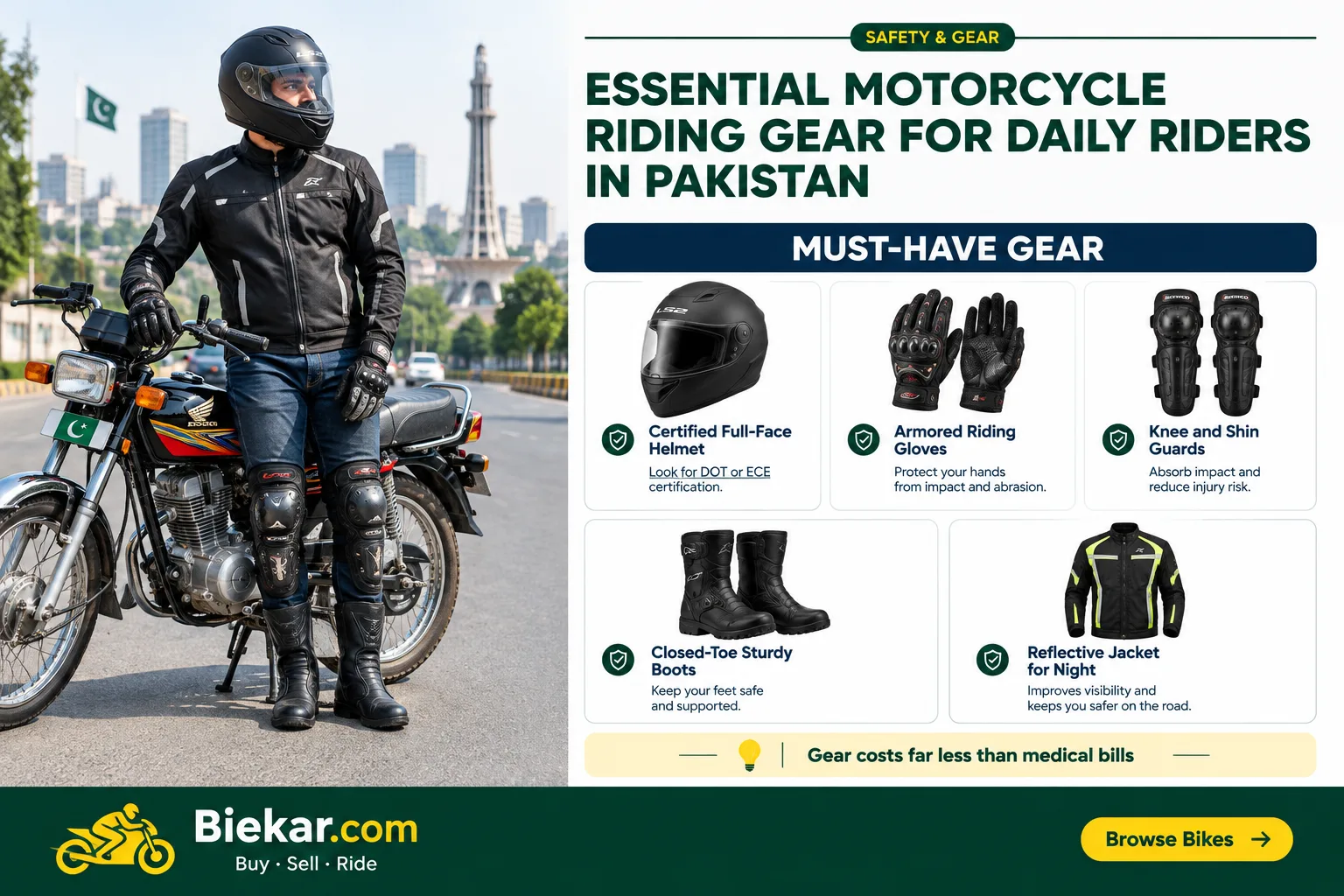
1. A certified full-face helmet
Your helmet is the one item you should never compromise on. Look for a genuine DOT یا ECE 22.05 / 22.06 label inside the helmet, not just a sticker on the shell. Full-face designs protect the chin, which open-face and cap-style helmets leave exposed. Helmet enforcement is growing in Islamabad, Rawalpindi and Lahore, but a legal helmet is not always a protective one, so read our guide to choosing a safe helmet and spotting a fake.
2. Armoured riding gloves
In a fall your hands hit the road first, by instinct. Good gloves protect your palms from gravel and give your knuckles some padding. For Pakistan's hot summers, choose perforated mesh gloves with knuckle protection. In winter, switch to insulated, windproof gloves so your fingers stay warm enough to work the brake and clutch properly.
3. Knee and shin guards
Knees and shins take a lot of the damage in low-speed spills. Slip-on, hinged guards are affordable and easy to wear over jeans or trousers, and many riders find them comfortable enough for daily use. Choose guards with firm shells and adjustable straps that do not slide down while you ride.
4. Sturdy footwear
Chappals and open sandals offer no protection for your ankles and can slip off at the worst time. Wear closed-toe leather shoes or riding boots that cover the ankle, with a grippy sole so you can hold the bike at a stop. Avoid long laces that could catch on the chain or footpeg.
5. A jacket and visibility
A jacket with shoulder and elbow armour protects the joints that break most easily. Bright colours and reflective strips make you easier to see, which matters in rain, fog and at night. See our guides to riding in the rain and winter and fog riding for seasonal gear advice.
If your budget is tight, buy in this order
- A certified full-face helmet
- Gloves
- Closed leather shoes or boots
- Knee and shin guards
- A jacket with armour and reflective strips
Buying tips
- Try everything on before you buy. Gear that does not fit will not protect you.
- Be wary of prices that seem too low, especially for helmets, because look-alike replicas are common in local markets.
- Replace a helmet after any crash, and replace gear that is torn, cracked or no longer fits.
- Wash gloves and pads regularly so you keep wearing them.
What it means for you
Gear is cheaper than a hospital stay, a lost month of income or a permanent injury. Pick up the essentials first, wear them on every ride including short trips, and add the rest as you can. If you are upgrading your bike as well, browse motorcycles for sale on Biekar.
Disclaimer: Helmet laws and enforcement differ by city and change often. Check current rules with local traffic police.
Sources: ProPakistani on helmet rules · INCPak on helmet safety and certification
Looking for your next bike?
Browse thousands of new and used motorcycles from sellers across Pakistan.
بائیکس دیکھیںMore articles
 Safety
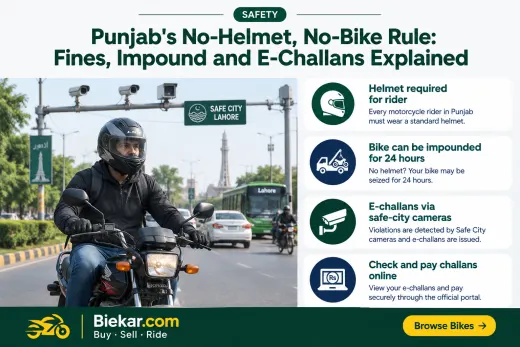
Punjab's No-Helmet, No-Bike Rule: Fines, Impound and E-Challans Explained
Punjab now impounds bikes for 24 hours when riders skip the helmet, and safe-city cameras issue e-challans automatically. Here is what riders need to know to stay legal.
 Safety
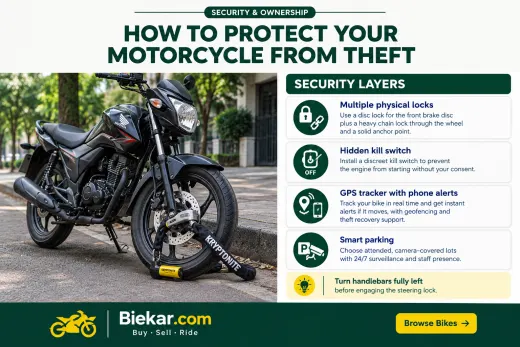
How to Protect Your Motorcycle from Theft in Pakistan: Locks, Trackers and Parking Habits
Factory steering locks are easy to break. Layered security and smart parking make your bike a harder target.
 Safety
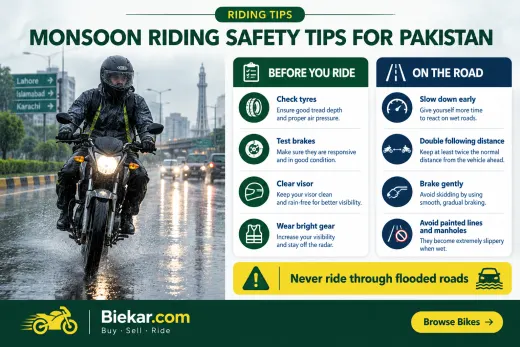
Riding in the Rain: 15 Monsoon Safety Tips for Pakistani Motorcyclists
Slippery roads, flooded streets and poor visibility make monsoon riding risky. These tips help you get home safely.