
When the monsoon arrives, roads change character within minutes. The first drops lift oil and dust from the surface, turning tarmac into something close to a skating rink. Add potholes hidden under water, drivers who brake late and a windscreen-free ride, and rain becomes one of the riskiest conditions for a two-wheeler. Preparation and smoother habits matter more than speed.
Before you ride
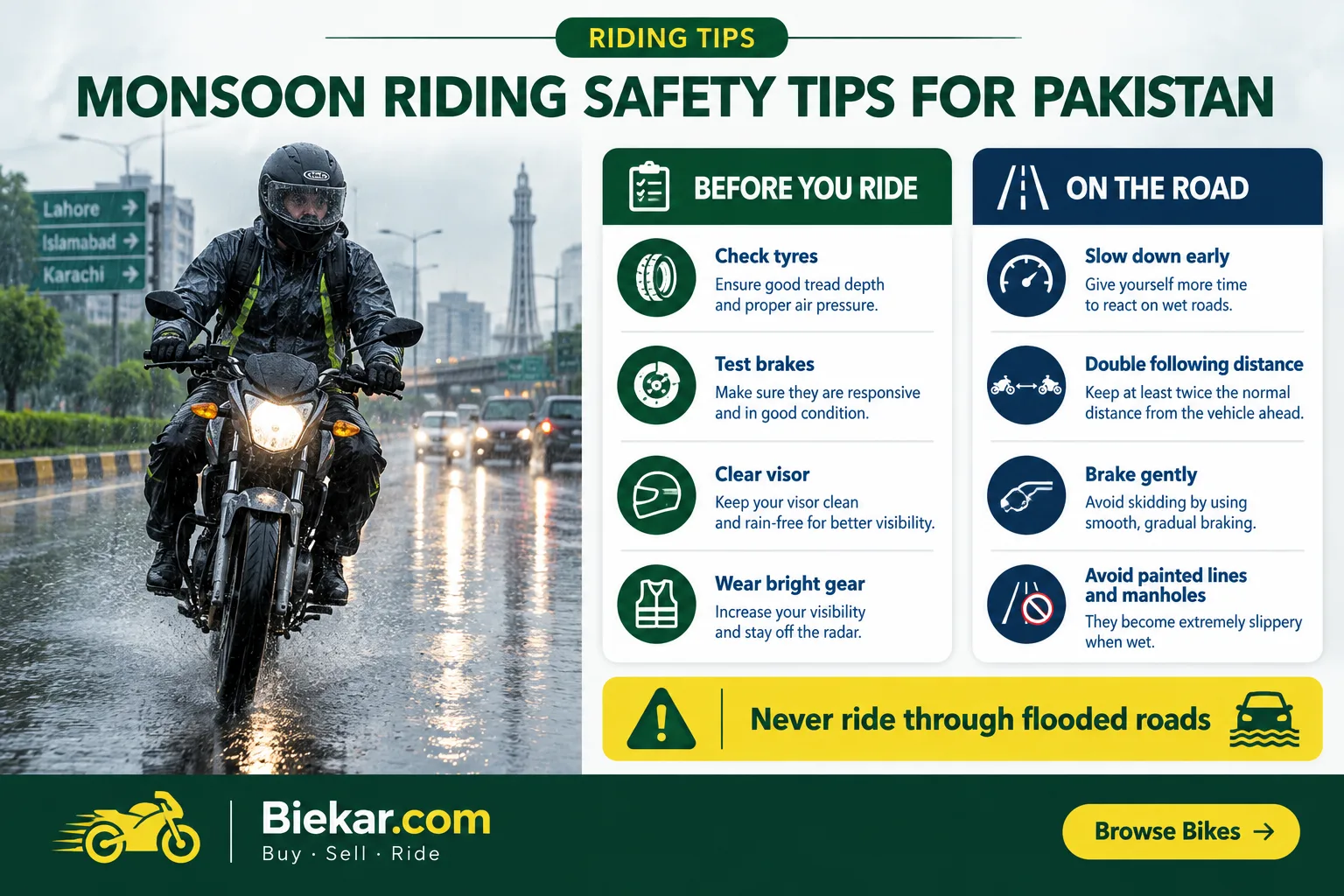
- Check your tyres. Tread depth and pressure decide how much grip you have. Worn tyres on wet roads are dangerous, so replace them before the season starts.
- Test both brakes. Make sure levers are not spongy and that pads or shoes have life left. Drum-brake bikes lose bite when wet, so allow extra distance.
- Check lights and indicators. Visibility is half of safety in the rain.
- Wear a proper helmet. Use a visor that does not fog. A thin anti-fog coating or a cracked-open visor can help. Read our guide to choosing a safe helmet.
- Dress to be seen and stay dry. A rain jacket in a bright colour, waterproof gloves and boots help you stay alert. Cold, wet hands slow your reactions.
On the road
- Slow down early. Reduce your speed before corners, not in them.
- Double your following distance. Wet roads can double stopping distance.
- Brake gently and smoothly. Squeeze both brakes progressively. Sudden braking can lock a wheel.
- Avoid sudden leaning and throttle changes. Keep the bike as upright as you can and roll the throttle on smoothly.
- Watch for slippery spots. Painted lines, zebra crossings, manhole covers, metal plates, mud and oil patches near petrol pumps are all slick when wet.
- Stay out of the gutter edge. Water and debris collect there.
- Be visible. Keep your headlight on and stay out of truck and bus blind spots.
Flooded roads
- If you cannot see the road surface, do not ride through. Potholes, open drains and uncovered manholes are common in Pakistani cities.
- If you must cross shallow water, ride slowly in first gear, keep the revs steady and avoid stopping halfway. Water above the exhaust or air intake can stall or damage the engine.
- Test your brakes right after crossing by applying them lightly a few times to dry the pads.
After the ride
- Dry the bike, then wipe the chain and apply lube. Water strips lubrication quickly, as our chain care guide explains.
- Check engine oil. A milky colour means water has entered the engine.
- Spray electrical connectors with a protective product if they were soaked.
- Park under cover where possible to limit rust.
What it means for you
Monsoon riding is manageable if you give the bike and the road more time. When in doubt, wait out the heaviest downpour. A late arrival is better than a crash. For regular upkeep through the year, see our motorcycle maintenance checklist.
Looking for your next bike?
Browse thousands of new and used motorcycles from sellers across Pakistan.
بائیکس دیکھیںMore articles
 Safety
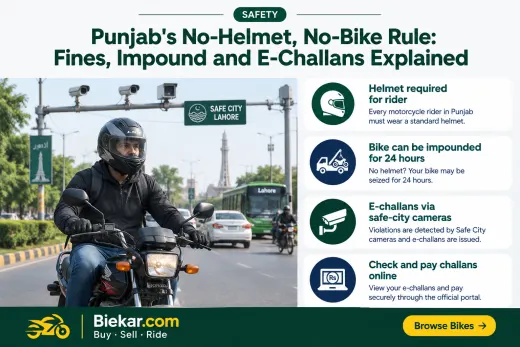
Punjab's No-Helmet, No-Bike Rule: Fines, Impound and E-Challans Explained
Punjab now impounds bikes for 24 hours when riders skip the helmet, and safe-city cameras issue e-challans automatically. Here is what riders need to know to stay legal.
 Safety
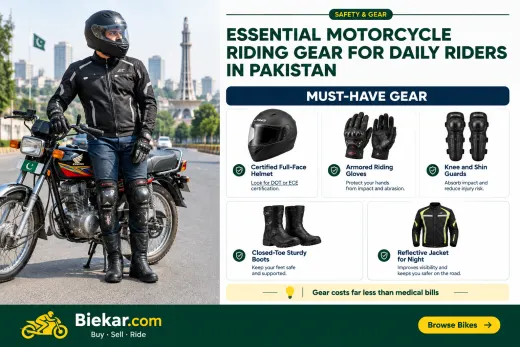
Essential Motorcycle Riding Gear in Pakistan: What Every Daily Rider Needs
Most riders treat gear as optional, yet it costs far less than a hospital bill. Here is the gear that matters, in order of priority.
 Safety
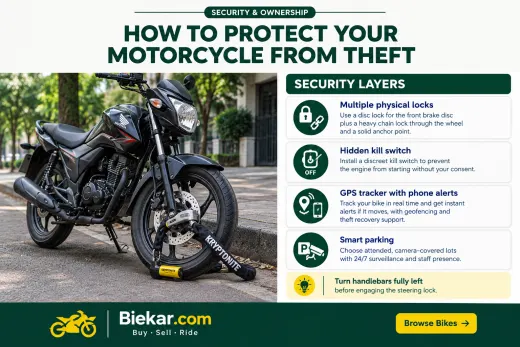
How to Protect Your Motorcycle from Theft in Pakistan: Locks, Trackers and Parking Habits
Factory steering locks are easy to break. Layered security and smart parking make your bike a harder target.